Key Takeaway: Successful transit technology starts with a clearly defined operational problem, not a product demo. After nearly 47 years in public transport and ITS, Carol Schweiger argues that agencies should assess their needs before they buy, use pilots to build a longer-term roadmap, design for the most constrained users from the beginning, and understand how people actually make travel decisions before building tools for them.
Walk through any transportation conference exhibit hall and you will see impressive technology. You will also see agencies falling in love with it.
Carol Schweiger has spent nearly 47 years in public transport and technology, helping transit agencies plan, procure, implement and evaluate systems. Early in her consulting career, she says, clients would regularly attend a conference, spot a product and announce that they wanted it. Her response was always the same question: why?
In a recent episode of Urban Innovate TALKS, we spoke about what that question reveals, and why it still matters in the age of automation, AI and Mobility as a Service.
Why do transit agencies buy technology they don’t need?
The pattern is familiar: a technology looks compelling, so an agency looks for a problem it could solve.
Carol sees this today in software for demand-response services. There are excellent scheduling and dispatching products on the market, but many are designed for larger operations. A very small agency, with fewer than ten vehicles, may still be drawn to them simply because they are the products it sees at conferences and in vendor conversations. Simpler tools that would serve it perfectly well receive far less attention.
Her remedy is a needs assessment, and it does not require a consultant. An agency can ask itself:
- Where are our problems: operations, customer service or elsewhere in the organization?
- What issues do we face during a typical operating day?
- What would a good solution actually need to do?
Only once the problem is understood does it make sense to examine potential technologies.
Can exploration and problem-first thinking coexist?
I raised a tension in the conversation. Problem-first thinking is sound, but some of the most valuable technology outcomes were not anticipated at all.
Carol’s example is vehicle location. In the 1980s, “location” meant a tag on a vehicle passing a tag on a signpost. It was not real time, and it was fragile. When GPS became available for civilian use, agencies gained live vehicle location, and then much more: continuous monitoring of schedule adherence, detection of vehicles going off route and, in her view the most important benefit, accurate predictions of when a vehicle would arrive for customers.
Later, linking passenger counting to vehicle location let agencies tell riders how full a vehicle was, something that became important during COVID.
Her conclusion is that early technology can open doors to innovation people had not considered. The two ideas are not contradictory:
- Define the problem you are solving today.
- Choose technology that also gives you room to grow.
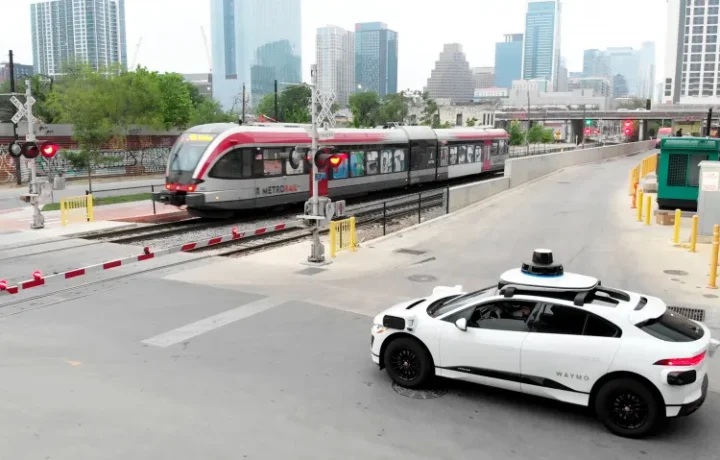
What have automated vehicle pilots taught transit agencies?
The industry is tired of pilots. Carol agrees, but she points to what they have shown:
- Automation can be effective over shorter distances, especially for first-mile and last-mile services.
- Some early automated vehicles were criticized by riders as too slow, because they were designed to operate at low speeds.
- Riders raise human concerns, such as what happens if they need to reach someone during a trip.
- Full-size, 40-foot automated buses are still largely in development and testing rather than in routine service.
- Small, defined service areas, such as certain microtransit services, may be a good fit for automated vehicles today.
Both of us see pilots as most valuable when they are part of a roadmap, not a one-off experiment. An agency may be too small to deploy at scale now, but exploring automation can lead it to related benefits, such as depot automation or safety improvements.
We also discussed mixed fleets. In Singapore, a bus line is being trialed in which human-driven buses run during peak hours and automated vehicles serve the same route and stops off-peak. Carol sees this as a smart model, because it shows that automation does not have to be all or nothing.
Why does real-time information change how riders feel about service?
Carol shared a story from the mid-1990s, when a test route in London began providing customers with next-bus information. Before the technology was installed, riders were surveyed about the service. Afterward, they were asked again.
The bus service itself had not changed: no new schedule and no improvement in reliability. Yet almost everyone said it had improved.
The lesson is that uncertainty is a large part of the rider experience. Knowing when the bus will arrive changes how a wait feels, even if the wait is the same.
What do innovative transit agencies look like?
Carol sees a clear shift among larger agencies. In the past, the priority was to put reliable service on the street every day, with little room for innovation. Today, some agencies have an innovation department, or at least a few people who continually scan the industry and ask: Do we have what we need? If not, should we partner with the private sector or build it ourselves?
Her local example is fare payment, which has moved from paying with a token to tapping any credit or debit card. That progress also raises a new question about people without a card, which is why accessibility must stay part of the discussion.
Why did Mobility as a Service stall?
Carol was enthusiastic about MaaS from the start. The concept, which originated in a master’s thesis in Finland, was about connecting people’s lives to transport options so they could get to school, shops, government offices and entertainment.
In practice, she says, many MaaS efforts became about building an app. After 15 years and a very large number of pilots, most never went beyond the pilot stage. The missing piece was understanding how people make travel decisions. Your decision to go from A to B may be completely different from mine, and without understanding that, it is hard to build a tool people will choose to use.
She also pointed to sustainability:
A technology must be financially sustainable as well as useful, or people will not keep using it.
Carol is encouraged that European technology projects increasingly must include the social sciences and humanities. She still believes the MaaS concept is sound, but notes: “We’re just not there yet.”
I added that people also cannot be placed in boxes. The same person might be a transit enthusiast on one day, a traveler with luggage the next, and someone who is simply tired on a third. Carol agreed, and offered her own example: a committed transit user who will still drive to buy a large bag of cat litter. Good mobility systems let us adapt to our needs through the day.
How should agencies design for accessibility?
Carol’s advice is to flip the usual order. Too often, a service is designed for a typical user with a bank account, a smartphone and a data plan, and the people who do not have these are considered afterward.
Instead, design for people who face the greatest constraints, whether physical, cognitive or financial, from the beginning. If it works for them, it works for everyone. And as I put it in the conversation, almost all of us will face an accessibility challenge at some point, even if only temporarily.
Which technology is overhyped, and which is underrated?
Overhyped: AI. Carol’s concern is with labeling. Many products now carry an AI tag even though the underlying technology is the same as before. Her question for vendors and agencies is: what is the AI actually doing for us?
Underrated: simple technology and data. Over the last five to ten years, transit has recognized the value of data far more than before. Traditional metrics, such as passenger counts alone, no longer tell the full story. The foundations matter: how data is collected, whether through a simple passenger counter or another tool, and what questions it will help answer.
I added that data collection includes feedback from riders. A feedback process that takes 20 minutes may mean riders simply give up, while something as simple as a short WhatsApp or SMS message can work well.
What can transit agencies do now?
Pulling the conversation together, here are practical steps any agency can take, whatever its size:
- Run a needs assessment before attending the next exhibit hall or issuing the next RFP.
- Match the solution to the agency’s scale, including simpler products where they fit.
- Treat pilots as part of a roadmap, and gather rider feedback on what worked and what did not.
- Consider phased and mixed-fleet approaches, rather than all-or-nothing deployment.
- Design for diverse users from day one, not as an afterthought.
- Ask what AI is doing in any product, and what changed compared with the earlier version.
- Invest in data and feedback channels, and make both easy for riders and staff.
Technology will keep evolving. The agencies that benefit most will be those that keep asking the question Carol asked at the start: what problem are we trying to solve, and for whom?
This article builds on a conversation with Carol Schweiger on Urban Innovate TALKS. Listen to the full episode on your favorite podcast platform: https://share.transistor.fm/s/3bb26b32
FAQ
What is a needs assessment in public transit?
A needs assessment is a structured way for a transit agency to identify the problems it faces before selecting technology. It asks where issues occur, such as in operations or customer service, and what a solution must do. It can be carried out internally and does not require a consultant.
Why do transit agencies choose technology before defining the problem?
Agencies are often exposed to new products at conferences and through vendors, and a compelling demonstration can make a technology seem necessary. Without a needs assessment, an agency may buy something that does not fit its size, budget or actual challenges.
What are the benefits of real-time arrival information in transit?
Real-time vehicle location enables accurate arrival predictions, schedule-adherence monitoring and detection of off-route vehicles. Combined with passenger counting, it can also show how full a vehicle is. Riders often perceive service as improved simply because they know when a vehicle will arrive, even if the service itself has not changed.
Are automated vehicle pilots still useful for transit agencies?
Yes, when they are part of a longer-term roadmap. Pilots have shown that automation can work well for first-mile and last-mile trips and in small service areas such as some microtransit services. They have also revealed rider concerns, such as vehicle speed and the ability to reach someone during the trip.
What is a mixed fleet approach to automated transit?
A mixed fleet uses both human-driven and automated vehicles. One example is a bus line trialed in Singapore, where human-driven buses operate at peak times and automated vehicles serve the same route and stops off-peak. It allows agencies to adopt automation gradually, without an all-or-nothing change.
Why did most Mobility as a Service (MaaS) pilots not scale?
According to Carol Schweiger, many pilots focused on building an app and overlooked how people make travel decisions. Others also faced questions of financial sustainability. She believes the concept remains valid but requires deeper understanding of travel behavior, which is why European projects increasingly integrate the social sciences and humanities.
How should transit technology be designed for accessibility?
Start with the people who face the greatest constraints, including physical or cognitive limitations, low income, or lack of a bank account, smartphone or data plan. Designing for these groups from the beginning produces services that work for everyone, rather than adding fixes after launch.
Is AI overhyped in transportation?
Carol Schweiger believes AI is currently over-labeled: some technologies marketed as AI are largely unchanged from earlier versions. She recommends asking what the AI actually contributes, and she sees simple data collection and analysis as comparatively underrated.
Planning a technology investment, or trying to understand how your community experiences your transit system today? At Urban Innovate, we help agencies evaluate mobility technologies and deployments through our services, and pulsur® transforms public narratives into actionable insights to support better decision-making. Feel free to get in touch or explore our resources.