Key Takeaway: Robotaxi deployment is often framed as a regulatory question, focusing on who authorizes these vehicles and applicable safety requirements. For cities like Austin, the role extends beyond regulation to include managing streets, ensuring first-responder preparedness, and improving infrastructure to accommodate this new mobility technology.
Robotaxi deployment is often framed as a regulatory question: Who authorizes the vehicles? What safety requirements apply? What can a city permit — or prohibit?
But for many cities, particularly in the United States, local governments have limited authority over autonomous vehicle operations.
That does not mean they have no role.
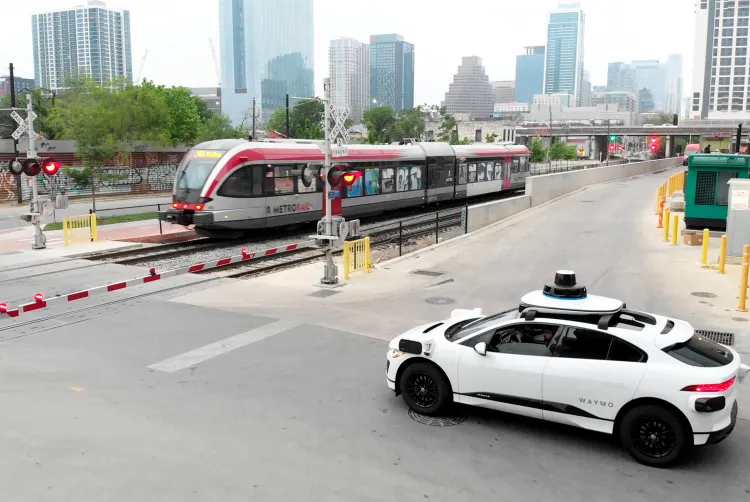
Austin, Texas offers an interesting example. The city has become one of the most active autonomous vehicle markets in the United States, with several companies deploying or testing automated mobility services. At the same time, Texas law has historically placed most authority over automated vehicles at the state rather than municipal level.
In a recent episode of Urban Innovate TALKS, Rachel Castignoli from the City of Austin’s Transportation and Public Works Department described how the city has approached this situation.
One of her recommendations to other cities was particularly simple: even without regulatory authority, ask for what you want.
That principle points toward a broader definition of AV readiness.
AV readiness is more than permitting
A city’s responsibilities do not disappear when vehicle regulation sits at the state or national level.
Cities still manage streets, traffic operations, emergency response, construction zones, special events, curbs, transit interfaces and much of the information needed to operate safely in a complex urban environment.
Austin therefore engages with AV operators on practical issues that directly affect operations.
One priority is first-responder preparedness.
Rather than having firefighters or police encounter an unfamiliar automated vehicle for the first time during an emergency, Austin organizes training where responders can see the vehicles, access them and understand how they should interact with them.
This seems operational, but it is also a governance principle: prepare institutions before deployment scales.
Digital information matters — but basic infrastructure still matters too
Automated vehicles depend on sophisticated sensing and mapping. Yet urban environments change constantly.
Roadworks appear. A street closes for an event. Emergency responders redirect traffic. A police officer gives instructions that conflict with a traffic signal.
Cities therefore have an important role as information providers.
Austin shares information on road closures, events and other changes in the right-of-way and is progressively improving how this information can be communicated digitally.
At the same time, the city’s experience provides an important reminder: preparing for AVs does not necessarily mean installing expensive AV-specific infrastructure everywhere.
Clear striping, understandable signs, well-designed intersections and visible restrictions help automated vehicles — but they also help human drivers, cyclists and pedestrians.
Investment in a clearer and safer right-of-way can therefore create benefits regardless of how quickly vehicle automation develops.
Robotaxis also change the curb
Pickup and drop-off is emerging as another important interface between cities and automated mobility.
When an AV repeatedly stops in an inappropriate location, the immediate issue may be vehicle behavior. But repeated conflicts may also reveal a deeper infrastructure problem: people are trying to access a destination for which the city has not provided an appropriate pickup or drop-off space.
That transforms an operational complaint into planning information.
As ride-hailing and robotaxis increase demand for short-duration curb access, cities may need to reconsider how much curb space is allocated to parking compared with passenger loading, deliveries, cycling infrastructure and other uses.
The arrival of automated vehicles therefore reinforces a trend that was already underway: the curb is becoming active mobility infrastructure rather than simply a place to store vehicles.
Incident reporting can support continuous improvement
Austin has also developed a public dashboard for autonomous vehicle incidents reported by residents, first responders and city staff.
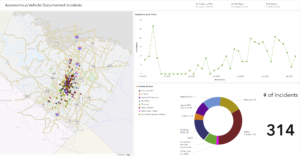
Austin’s AV Incidents Dashboard is available under https://www.austintexas.gov/transportation-public-works/autonomous-vehicles
Importantly, the objective is not simply to count incidents.
Repeated reports can help determine whether a problem originates with vehicle behavior, infrastructure, temporary traffic control or another part of the transportation system.
That information can then be discussed with AV companies — and can also trigger changes on the city side.
This creates something cities will increasingly need as automated mobility scales: a structured feedback loop between technology providers, public agencies and road users.
Cities should define their expectations now
One of the most important lessons from Austin is therefore that cities do not need to wait for comprehensive AV regulatory authority before preparing.
- They can already identify what they expect from operators.
- They can prepare first responders.
- They can improve road and curb infrastructure.
- They can establish channels for incident reporting and learning.
- They can determine what operational data would be useful.
And they can start asking how automated mobility should support existing public objectives — from Vision Zero and accessibility to transit integration and efficient use of public space.
The infrastructure decisions cities make today will remain long after today’s generation of autonomous vehicles has changed.
AV readiness should therefore not be about redesigning a city around a particular technology.
It should be about building a transportation system capable of accommodating new technologies while continuing to serve the public interest.
This article builds on a conversation with Rachel Castignoli from the City of Austin on Urban Innovate TALKS. Watch or listen to the full episode, “How Austin Is Preparing for Robotaxis”.

FAQ
Can cities regulate robotaxis?
It depends on the jurisdiction. In some places, cities have direct permitting or regulatory authority over autonomous vehicle operations. In others, such as Texas, much of that authority sits at the state level. Even where local regulatory powers are limited, cities can still influence how robotaxis interact with streets, emergency services, curb space, infrastructure and public transportation.
How can a city prepare for robotaxis before they arrive?
Cities can start by defining expectations for operators, training first responders, reviewing pickup and drop-off locations, improving road markings and signage, establishing incident-reporting processes, and determining how road closures, construction zones and special-event information will be communicated to AV operators.
Do autonomous vehicles require special infrastructure?
Not necessarily. AV companies generally design their vehicles to operate using existing road infrastructure. However, clear lane markings, understandable signs, well-designed intersections and accurate information about temporary road conditions can make the environment easier to navigate for both autonomous vehicles and human drivers.
Why is first-responder training important for autonomous vehicles?
Police officers, firefighters and other emergency personnel may need to stop, access, move or interact with an autonomous vehicle during an incident. Training allows them to understand these procedures before an emergency occurs and can reduce uncertainty during real-world operations.
How do robotaxis affect curb management?
Robotaxis create additional demand for short-term passenger pickup and drop-off space. Repeated stopping conflicts can reveal locations where existing curb allocation no longer matches travel demand. Cities may need to reconsider how curb space is divided among parking, passenger loading, deliveries, bike infrastructure and other uses.
What data should cities collect about autonomous vehicles?
Useful information can include the time and location of incidents, the type of interaction involved, recurring infrastructure problems, pickup and drop-off conflicts and reports from residents or first responders. The objective should be not only to count incidents but to identify patterns that can lead to operational or infrastructure improvements.
What can cities do if they have no authority over autonomous vehicle deployment?
They can still engage directly with AV operators and clearly communicate their expectations. Cities typically retain important responsibilities for infrastructure, emergency response, traffic management, construction, special events and curb allocation. These provide significant opportunities to shape how autonomous vehicles operate within the broader transportation system.
Planning or operating an autonomous mobility service? At Urban Innovate, we help agencies and operators evaluate AV deployments through our Urban Innovate Evaluation Framework looking beyond traditional KPIs to assess operational readiness, user experience and long-term impacts. And if you’re curious about how your community perceives your transit system today, pulsur™ transforms public narratives into actionable insights to support better decision-making. Feel free to get in touch or explore our services to learn more.