Will autonomous vehicles replace public transit?
It’s a question I hear all the time — at conferences, in client discussions, and increasingly in the media.
I understand where it comes from, because autonomous vehicles could imply that we suddenly have more vehicles in a city, with the intent of offering more mobility, which would then compete with other modes such as bus and rail.
But the real issue is not whether autonomous vehicles will replace buses or trains. I am rather interested in defining who will shape the mobility system in which this technology operates. And that’s where things get more complex.
What are we really talking about?
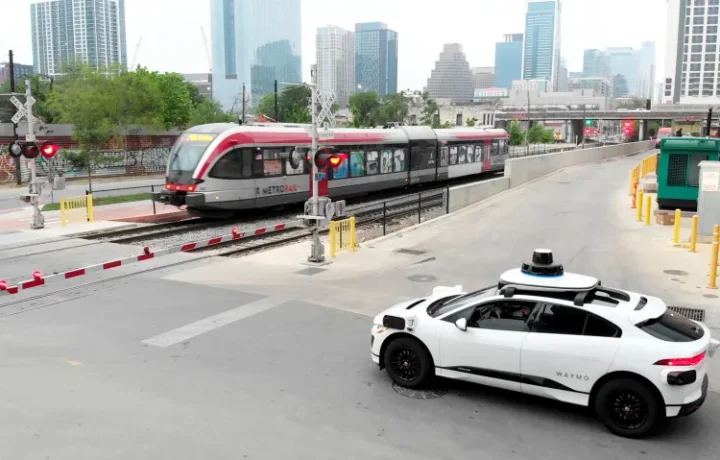
When we talk about autonomous vehicles (in the U.S., at least), we often jump straight to robotaxis — cars driving around cities, picking up passengers, driving empty if they don’t have a booking.
Note on the use of the term ‘robotaxis’: the more correct term is actually autonomous ride-hailing services, as taxis are regulated differently in cities over the world, but the term is now used broadly in the field.
But actually, autonomous technology is, at its core, a digital layer for transportation. It allows vehicles to be connected, monitored, optimized, and integrated in ways we couldn’t before. And depending on how it is used, it can either fragment mobility systems or make them significantly better.
So the question becomes: how do we make sure that the technology can also be used where the needs of most people can be met?
Market logic vs. public mandate
Private companies like Waymo can deliver innovation and high-quality services, but considering their shareholder-based structure, there is no guarantee of coverage, affordability, or long-term service in less profitable areas. In other terms:
- They go where demand is highest
- They adjust pricing based on market conditions
- They can stop services if they are not viable
None of this is inherently bad — it is how markets work. But it also means that if we rely only on private actors, access to mobility becomes… conditional.
Public transit is something else entirely
Public transit agencies operate with a very different mandate. They are there to ensure that people can move if they can’t drive, if they can’t afford alternatives, and even if demand is low. They run services that are not necessarily profitable — because they are necessary.
Public transit guarantees service. The technology coming from private players optimizes service.
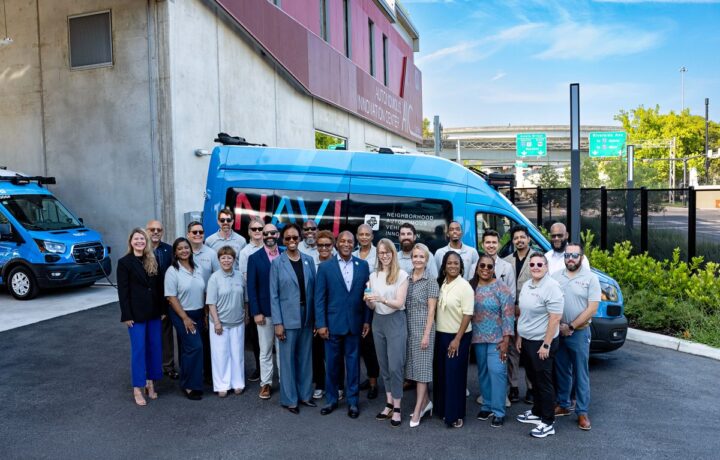
What remains open for discussion is which services public transit can operate — and I don’t believe we should restrict our thinking here. Historically, transit agencies have focused on rail and buses, but there is no reason it should stop there. There are enough examples around the world (e.g., my favorite agency of all time, Ruter in Oslo) where transit agencies explore autonomous on-demand ride-hailing services in areas where setting up a bus line would not be feasible.
Subscribe to Urban Innovate READS
A conversation with an operator – at the core of public transit
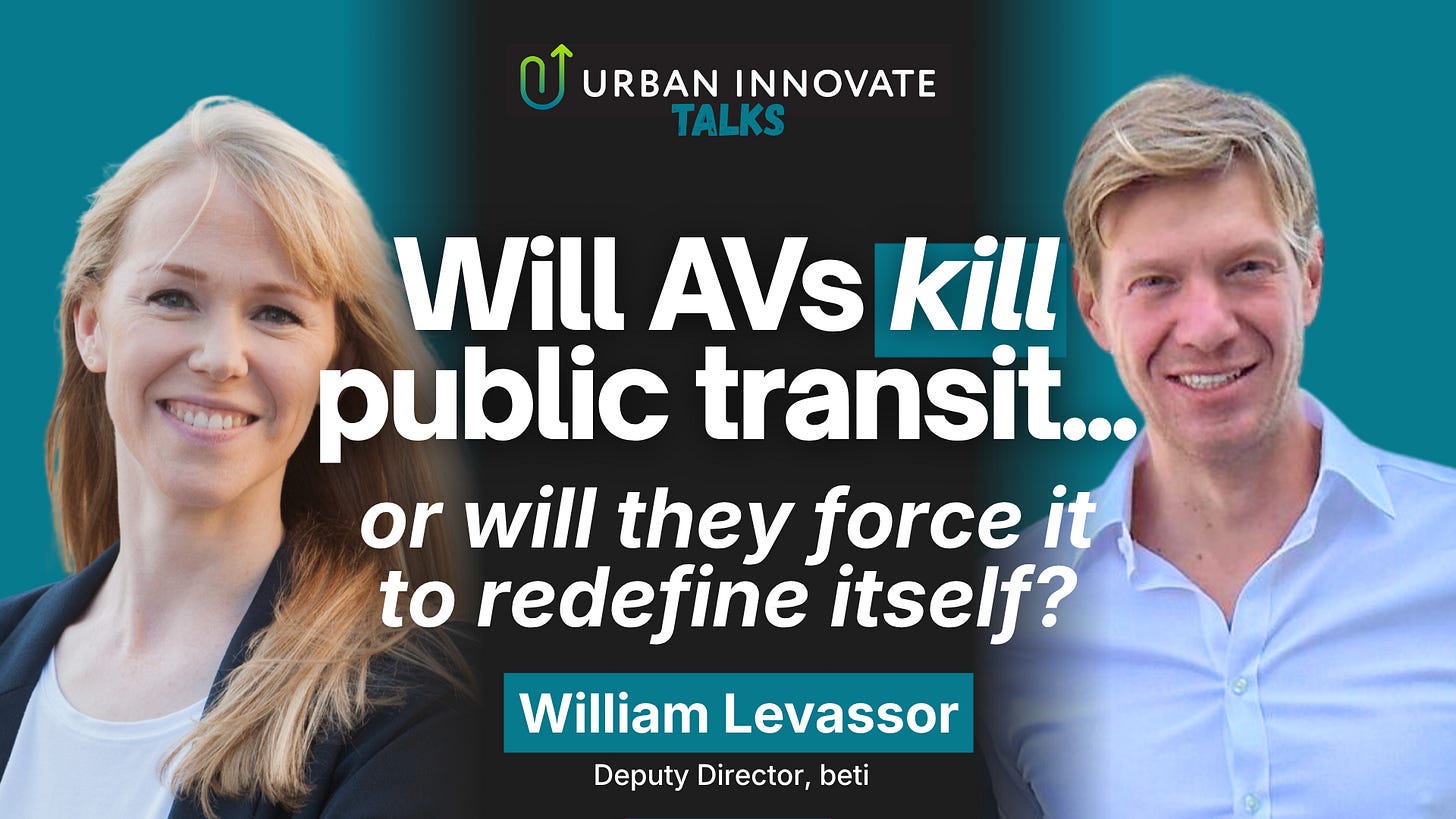
A few weeks ago, I recorded an episode of Urban Innovate TALKS with William Levassor, who has spent over a decade working on the operational side of autonomous mobility. Watch the full episode on YouTube or listen to it on your favorite podcast platform.
What struck me most in our discussion is how much of the fear around AVs comes from how people imagine them, not how they actually work. Most people picture a robotaxi that is fully autonomous with no humans involved at all, but in reality, these systems are operated and monitored by humans in the same way planes, metros, or even elevators are. As William put it very clearly: people see the vehicle — but not the system behind it.
What people say vs. what they actually need
This is something I see very clearly through pulsur, the tool we developed at Urban Innovate to analyze public narratives around mobility. We look at what people say — on social media, in forums, across different cities — and try to understand what is really driving their perceptions. And the results can be contradictory.
Take Jacksonville: people complain about a lack of frequency and unreliable bus services (“Routes are getting canceled for the day”, “what good is public transport if it’s not consistent & reliable???”). At the same time, they question why the transit agency, Jacksonville Transportation Authority, is investing in automation.
So on one side: “Transit doesn’t work well enough.” On the other: “Why invest in new technology?” There is a disconnect — not because people are wrong, but because the link between problems and solutions is not clearly communicated. That’s something we need to address.
The real risk is not the technology
Autonomous vehicles are not inherently a threat to public transit — the risk lies in letting a single service model, driven by market logic, define how the technology is used. As William puts it:
Robotaxis will go where there is the highest demand, and where there is the highest demand is usually where you already have a lot of options.
Right now, the dominant model for AVs in the U.S. is ride-hailing, but autonomous technology could just as well be used to:
- Improve first- and last-mile connections
- Increase service frequency in low-demand areas
- Extend service hours and make transit more responsive
- Make depot operations more efficient
A chance to fix what isn’t working today
Let’s be honest: public transit doesn’t always meet expectations. Not because the model is wrong, but because it hasn’t fully adapted to how people live today. We live in a world of real-time information, on-demand services, and immediate access through our phones. And transit still often operates with fixed schedules, limited flexibility, and gaps in service. That’s where autonomous technology — combined with digitalization — can make a real difference. Not by replacing transit, but by helping it evolve.
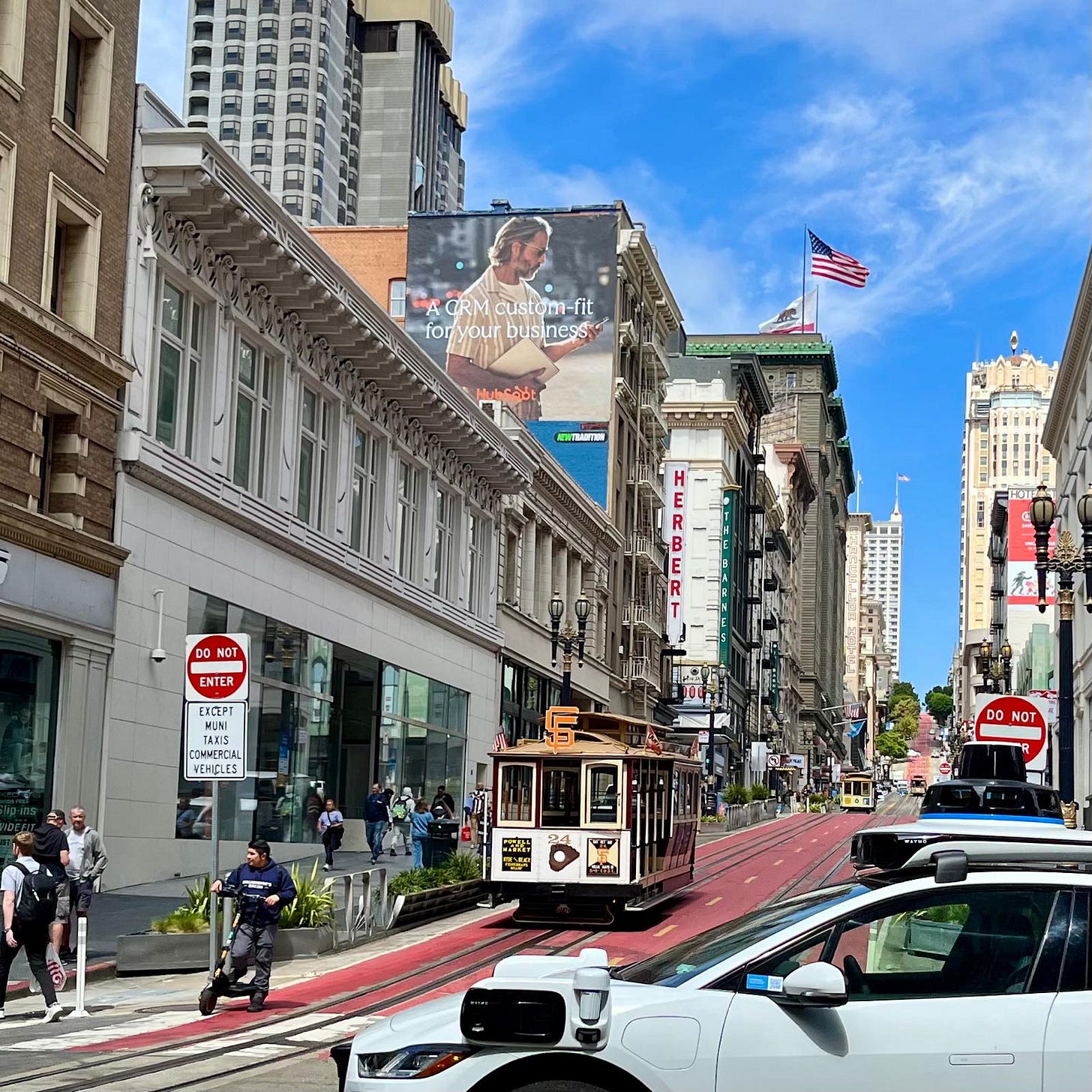
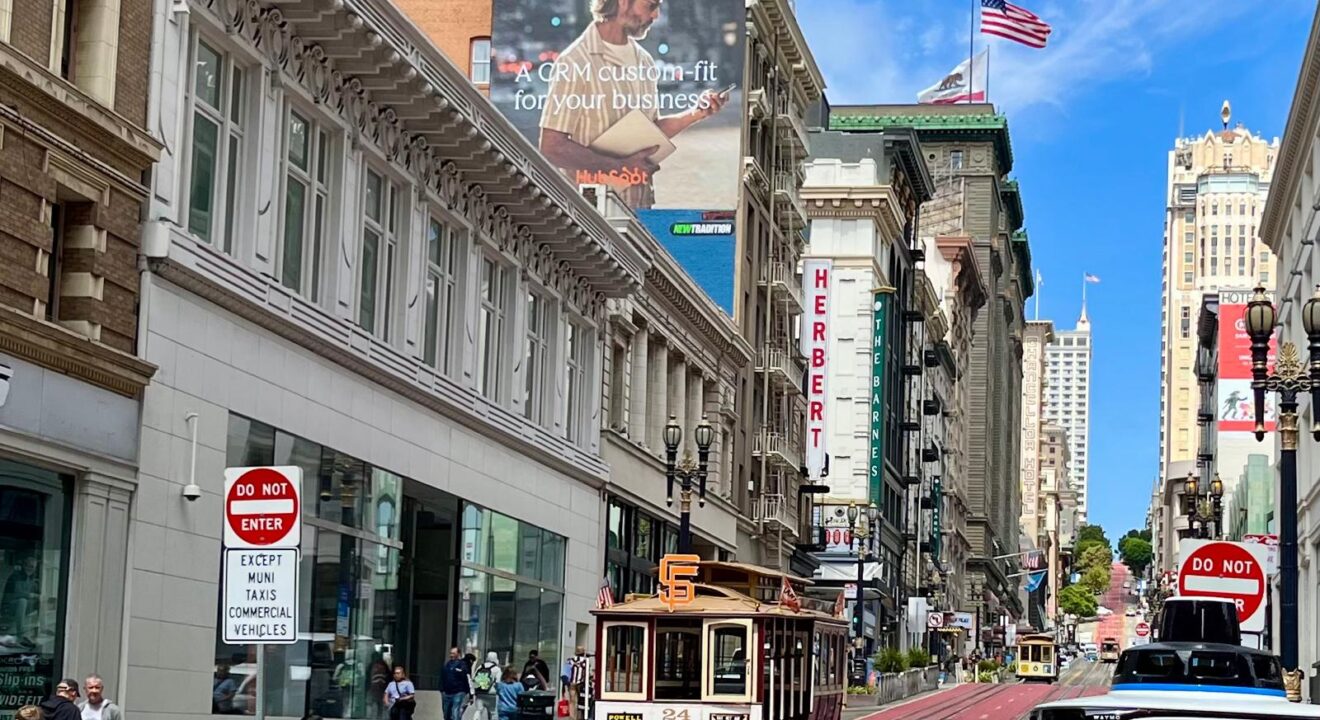
Waymo in downtown San Francisco in 2025, where public transit operates – beyond cable cars (!) – mostly efficiently (photo by the author)
So what should we do?
This is not a binary choice between public and private. We need both: private actors to innovate and push the technology forward, and public agencies to ensure that the system serves everyone. But public transit agencies need to stay in the driver’s seat when it comes to system design. Because if they don’t, the system will still evolve — just not necessarily in a way that serves the broader public interest.
If you want to go further
- Watch the full Urban Innovate TALKS episode with William Levassor — we go much deeper into operations, perception, and real-world deployment challenges.
- Follow what we’re building with pulsur and submit a research question to it — it’s helping cities and operators understand how people actually perceive mobility and where the disconnects are.
This conversation is just getting started. Please comment, reach out, and share this article if this topic resonates with you.