In a recent Urban Innovate TALKS episode with William Levassor, Deputy Director at beti and, above all, a transit operator at heart, I asked him a simple question:
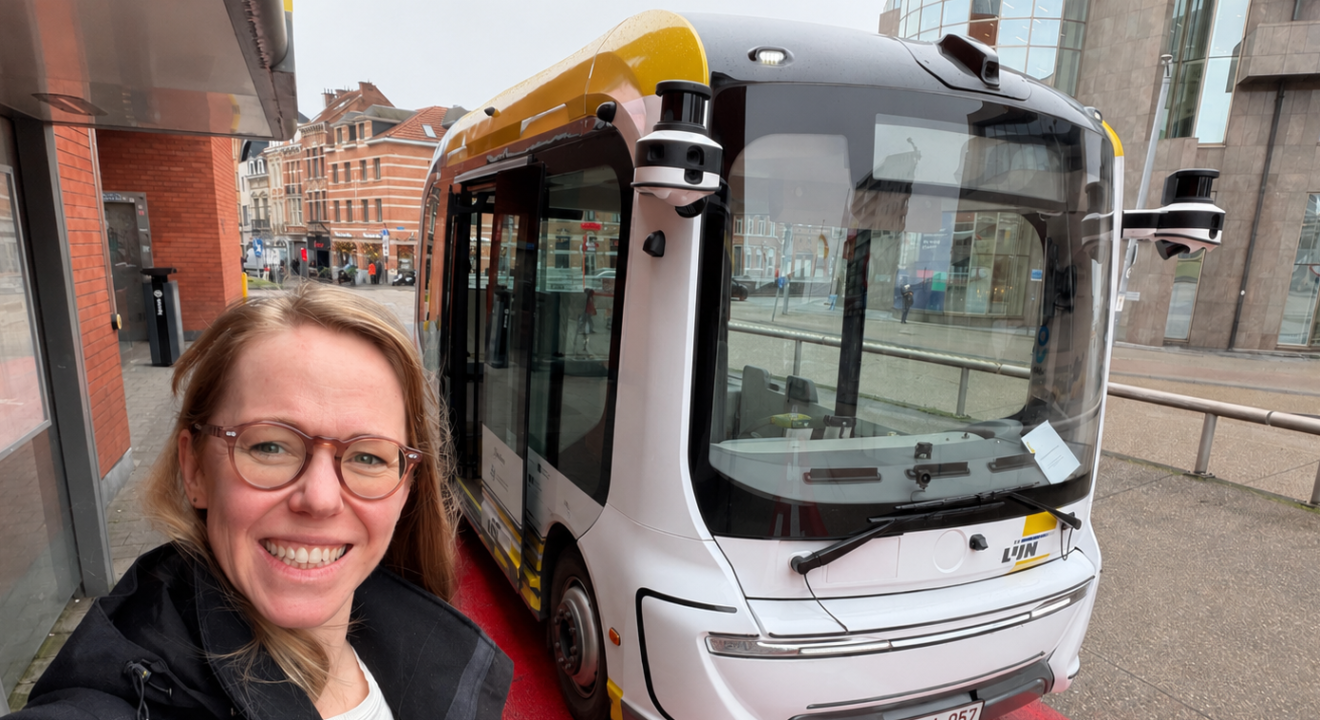
Imagine that a city or transit agency reaches out to you tomorrow and asks for autonomous vehicles — exactly like the ones they saw on TV operating in Leuven, Belgium. What would your answer be?
It is a relevant question because many cities and transit agencies are still unfamiliar with the capabilities, limitations, costs, and operational requirements of autonomous vehicles.
Here are some myths to debunk and practical considerations to keep in mind.
1. Don’t assume that because you saw two vehicles running on TV, the technology is ready to scale
A successful deployment of two vehicles does not automatically mean that 100 vehicles can be deployed tomorrow.
Scaling requires much more than vehicles. It requires operational processes, safety procedures, monitoring tools, maintenance capabilities, and organizational readiness.
2. Don’t start with the vehicle manufacturer
Instead, speak with a service provider or an operator that understands how to run mobility services.
Examples include operators such as beti in Europe or beep in the United States.
At Urban Innovate, we are connected with many of the leading operators, technology providers, and public stakeholders across both continents. If your organization is exploring autonomous mobility, don’t hesitate to reach out — we would be happy to share perspectives and help you build the right ecosystem around your project.
Autonomous vehicles are not simply vehicles; they are part of a broader mobility system. The discussion should start with the service, not the technology.
3. Be clear about what you want to achieve
Are you looking for:
- A demonstration project to showcase innovation?
- A pilot to learn about the technology?
- A long-term mobility service integrated into your transportation network?
The answer will influence every subsequent decision, from procurement to infrastructure investments.
4. Set a realistic budget
The vehicle itself is only one part of the equation. Today, autonomous shuttles typically cost between USD/EUR 250,000 and 500,000 per vehicle.
Beyond the vehicle, cities should also budget for:
- System calibration and deployment
- Control center capabilities
- Operations and maintenance
- Safety monitoring
- Staff training
Keep in mind that in the early stages, operational costs may be approximately 2 to 2.5 times higher than comparable manually driven services.
5. Don’t assume you will save 50% of your operating costs
A common assumption is that removing the driver automatically removes the associated labor costs. Reality is more complex.
Some functions disappear, but others emerge: remote supervision, fleet management, safety monitoring, customer support, maintenance, and data management.
As William summarized during our conversation:
Autonomous driving technology will help us keep and improve services by relying on different jobs than drivers.
This is particularly relevant in a context where many countries are already facing severe driver shortages.
6. Don’t buy a shuttle without understanding the specifications behind it
The vehicle itself is only the visible part of the system. Before committing to a purchase, cities should understand:
- Safety capabilities
- Operational limitations
- Passenger information systems
- Communication systems
- Accessibility features
- Remote support capabilities
Experienced operators can help define these requirements and assess whether providers can demonstrate and maintain them over time.
Curious about what is actually deployed today? Urban Innovate and Autonomy Paris jointly publish a quarterly Operational Use-Case Landscape of Automated Driving Systems currently operating in commercial services worldwide. If you’re interested in AV readiness, it is a useful resource to understand which vehicles, operators, and business models are already active in the field.
7. Prepare your physical and digital infrastructure
AV readiness is not only about vehicles. Cities and agencies should consider:
- Upgrading road markings and signage
- Creating or adapting pick-up and drop-off locations
- Building control center capabilities
- Developing digital platforms for performance monitoring
- Improving data collection and reporting
The good news is that many of these investments also benefit conventional transportation services and human drivers.
8. Don’t expect to buy 500 autonomous shuttles tomorrow
The market is still maturing. While production capacity is increasing, very few manufacturers are currently capable of delivering autonomous shuttles at large scale for public transportation operations.
Starting with a small deployment can nevertheless be valuable. It allows cities and transit agencies to refine their requirements, build experience, and identify the specifications that matter most. Over time, common specifications shared across cities could support joint procurement efforts and create stronger market signals for manufacturers.
9. Think beyond the vehicle
One of the strongest messages from our discussion was that autonomous vehicle readiness is not primarily about vehicles. It is about preparing an entire ecosystem.
When planning an AV service, cities should think about the full value chain:
Vehicles → Operators → Infrastructure → Partners → Operations → Riders
The cities that will be best positioned for autonomous mobility may not be those that deploy first, but those that start preparing today!
Watch the full Urban Innovate TALKS episode with William Levassor on YouTube, where we explore the practical steps cities and transit agencies can take to prepare for autonomous vehicles. It is also available on your favorite podcast platform.
Urban Innovate provides strategic advisory services to help mobility providers, cities, and agencies prepare for the autonomous mobility transition. Reach out to learn how we can support your AV readiness journey.